Two courses, 30+ lessons, recorded live in a real S/4HANA retail system (ZRetail: company code ZR01, store ZST1, DC ZDC1). Built by a former Accenture SAP Deployment Manager who has done this in the field, not just in a classroom.
Start here if you're new to IS-Retail. 18 videos covering generic articles, variants, listing, purchasing, sales, and store logistics — recorded live in an S/4HANA retail demo system, with industry bonus content for Fashion, Grocery, Pharmacy, Hardlines and FMCG.
View the course →
For consultants who already know the basics. Structured articles and mass maintenance: MM41, MASS, WRFMASSMAT, WSM3, mass extension and mass discontinuation — the transactions that separate a junior from someone who can run a rollout.
View the course →Before the S/4HANA courses above, I recorded voiceover onto an existing ECC IS-Retail course, cut what was outdated, and published it as a free playlist. It's the fastest way to see if IS-Retail is the specialization for you before enrolling in the structured courses.
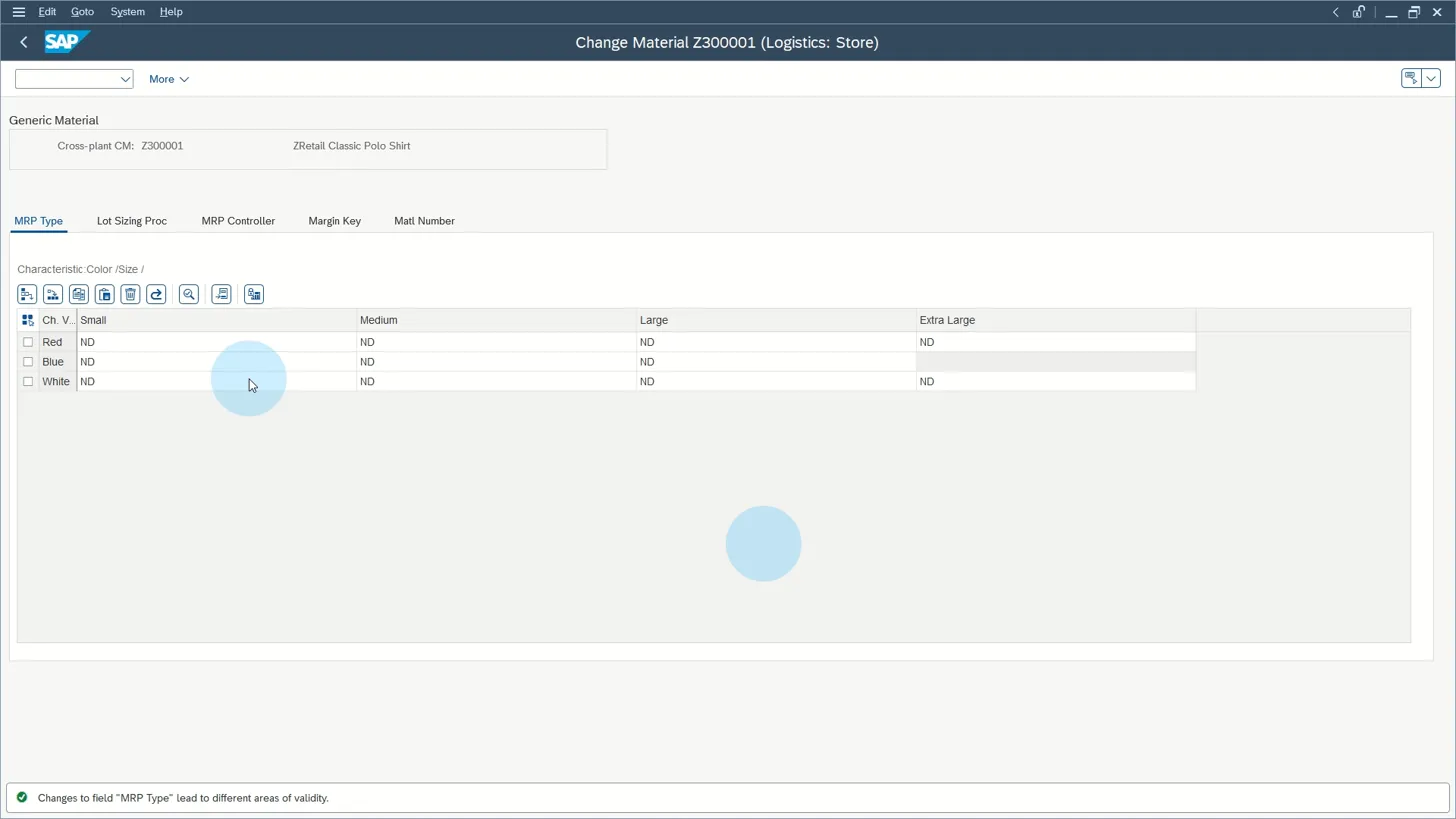
Not generic SAP training. These are the exact field-level confusions that cost consultants hours — documented from a live ZRetail S/4HANA system, article Z300001 (ZRetail Classic Polo Shirt, 11 variants).
MM46 is not a standalone mass-maintenance tool — it's a shortcut that opens the generic MASS transaction with object type BUS1001001 already preloaded. Once you know that, you stop hunting for an "MM46 field list" that doesn't exist and start working directly in MASS, where the real field selection lives.
WRFMASSMAT is Integrated Mass Change: the retail-specific tool that lets you change article data across multiple views and multiple stores/DCs in one pass, with listing and assortment logic baked in. Plain MASS is the generic cross-module tool. If you're only touching basic data fields, MASS works. The moment listing, assortment, or store-specific pricing enters the picture, you need WRFMASSMAT — using MASS there will silently skip retail-specific validations.
This is the single most common IS-Retail mistake for consultants coming from standard SAP MM. You'd expect MTART (material type) to tell you whether an article is generic or a variant — it doesn't, in retail. The field that actually matters is MARA-ATTYP (article category). Filter or debug on the wrong field and your generic-article logic will quietly miss records.
IS-Retail discontinuation doesn't use the field names you'd expect from an ECC materials background. The two fields that actually drive the process are labeled Available to and For sale till — get the mapping wrong in a data load and articles either discontinue too early or never trigger at all.
Both transactions are blocked per SAP Note 2476734 in current S/4HANA releases. If you're following an older tutorial or ECC-era documentation that references them, stop — they've been deprecated at the SAP level, not just disabled in your system. The course covers the current replacement path.
Two more cases where the "obvious" transaction from general MM knowledge is wrong in retail: promotion creation is WAK1, not BPK1. And the correct transaction is WSOA3, not WSA3 — a one-character difference that sends you to the wrong screen entirely if you mistype or misremember it.
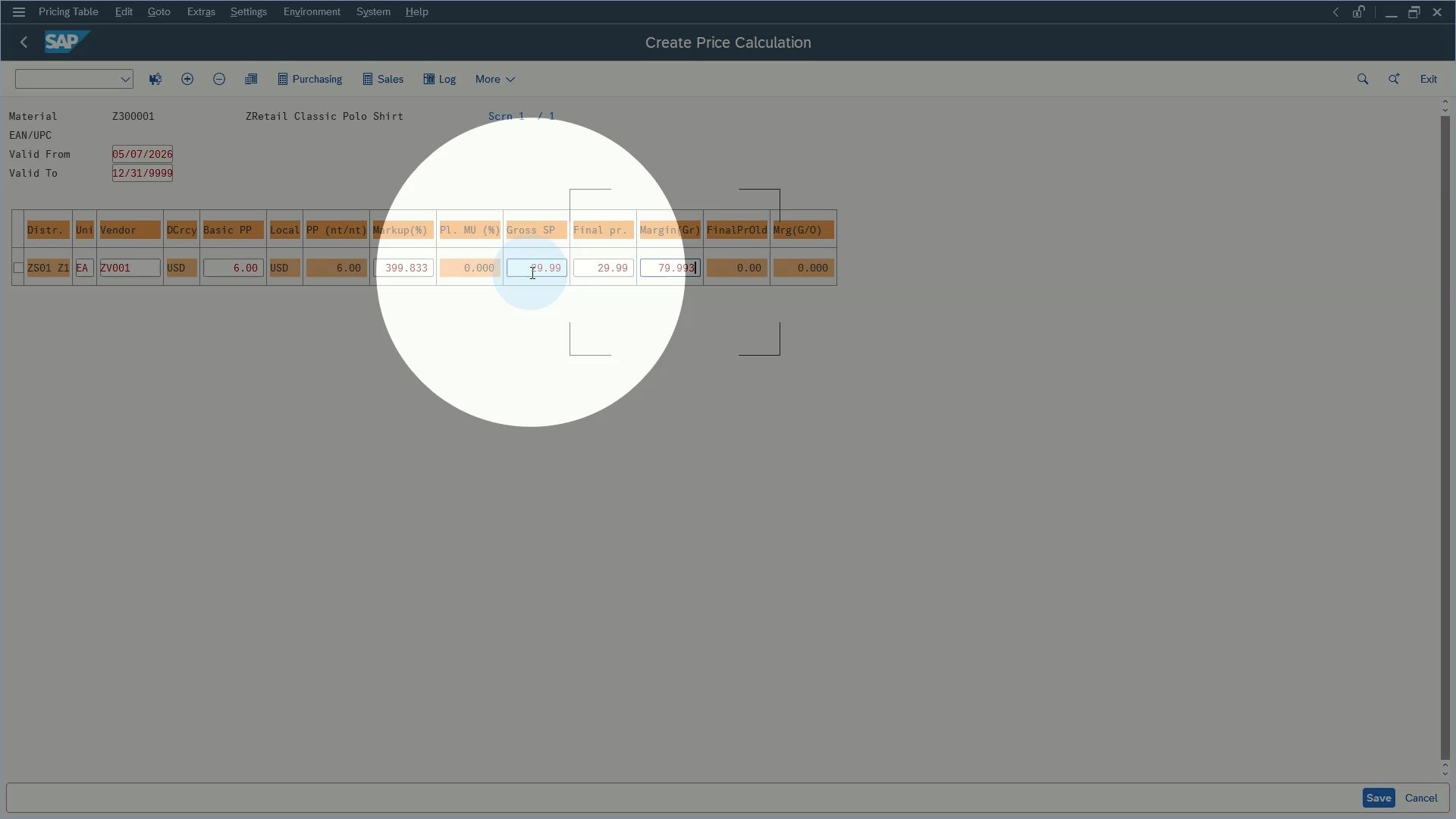
Yes — despite plenty of forum answers suggesting otherwise for retail-specific condition records, KONH (condition header) and KONP (condition item) are the correct tables to query. The course walks through pulling live pricing data from both during a real price calculation.
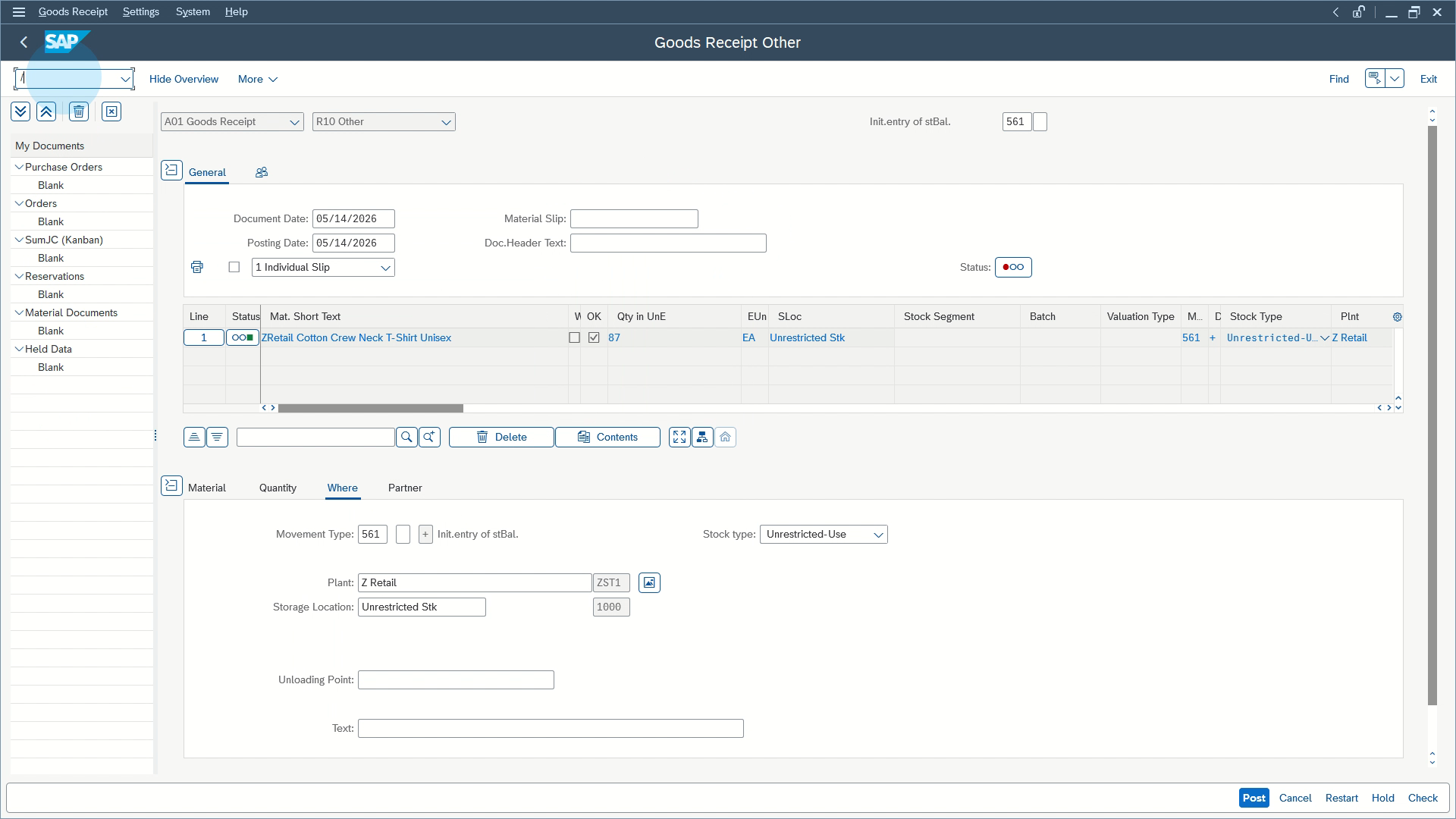
Beyond the transaction codes, the course walks a real stock movement end to end — movement type 561 (initial entry of stock balance), storage location, unrestricted-use stock — on the same article used throughout the course, so you see the article master data you built actually receiving inventory.
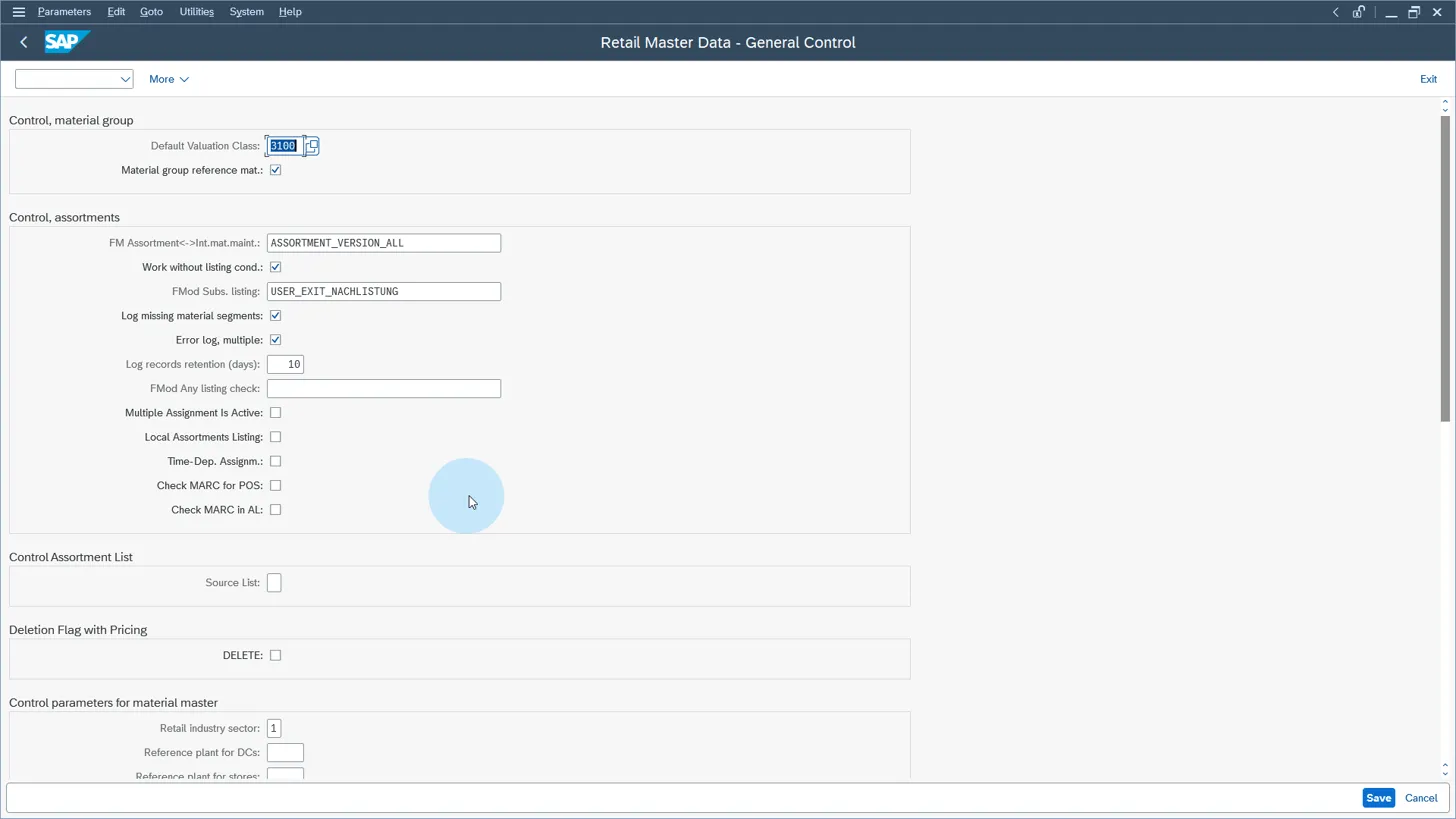
This customizing screen controls more than most consultants realize: default valuation class, assortment version logic, listing conditions, and — critically for data migration projects — the multiple-assignment and time-dependent assignment switches that determine whether your mass load will even be accepted.
No slide decks copied from SAP's own inconsistent documentation. Every screenshot, every transaction, every discontinued or renamed field in this training was checked against a running S/4HANA system — including the parts where SAP's own naming contradicts itself between ECC and S/4HANA.